
The export of forage depends on many factors; in addition to producing high-quality feed, it is essential to comply with the health and administrative requirements established by each country to authorize the import of products intended for animal feed.
We recently experienced one such case with South Korea, a highly valuable market for the Spanish forage sector, which—following the detection of an outbreak of African Swine Fever (ASF) in Spain—suspended imports of Spanish forage as a precautionary measure. Although dehydrated alfalfa does not constitute a route of transmission for the disease, international health regulations allow importing countries to adopt preventive measures to protect their livestock.
With the aim of regaining access to the Korean market, the Ministry of Agriculture, Fisheries, and Food (MAPA), in coordination with the authorities of the Republic of Korea, initiated the established procedure for the certification of Spanish facilities.
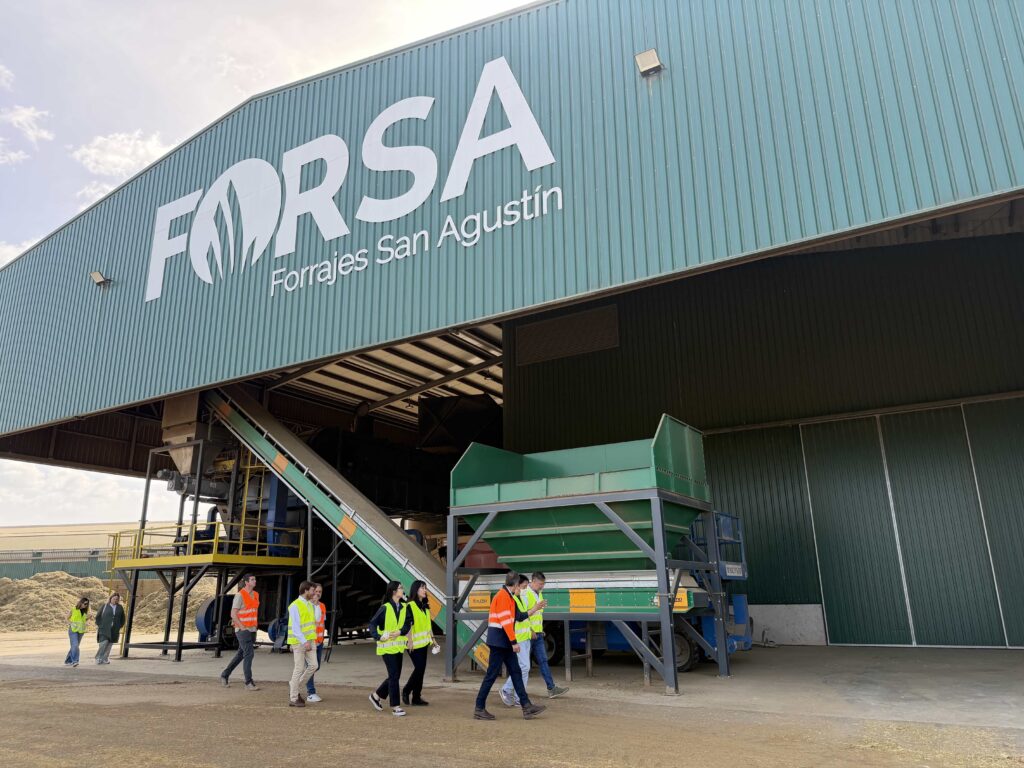
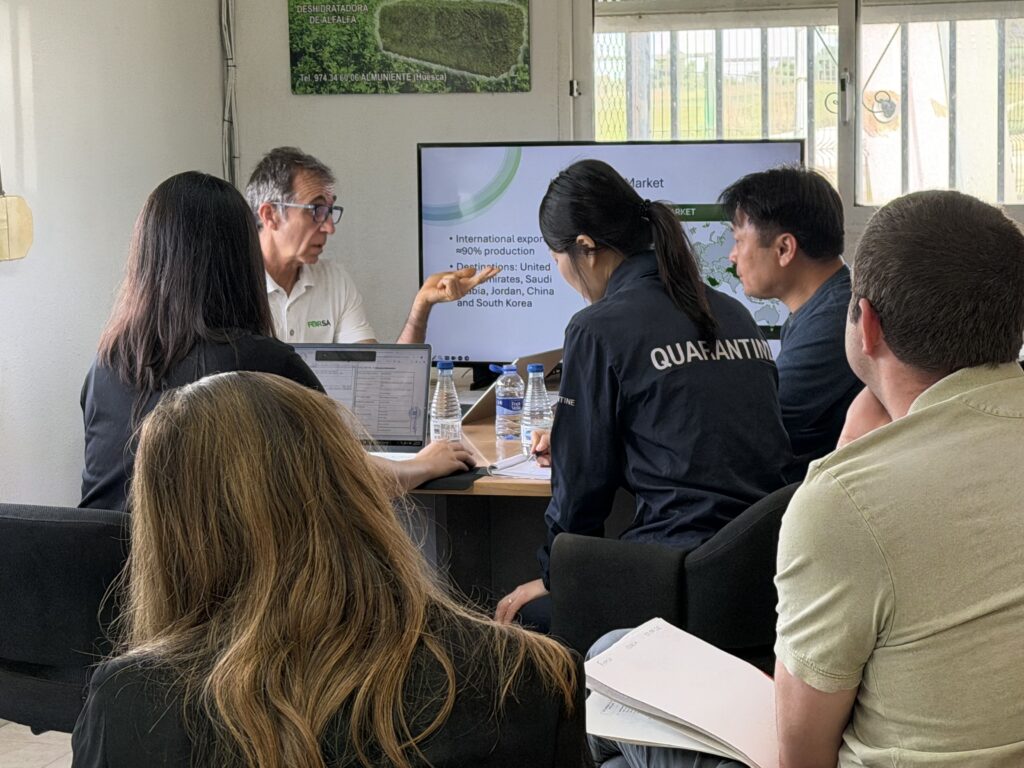
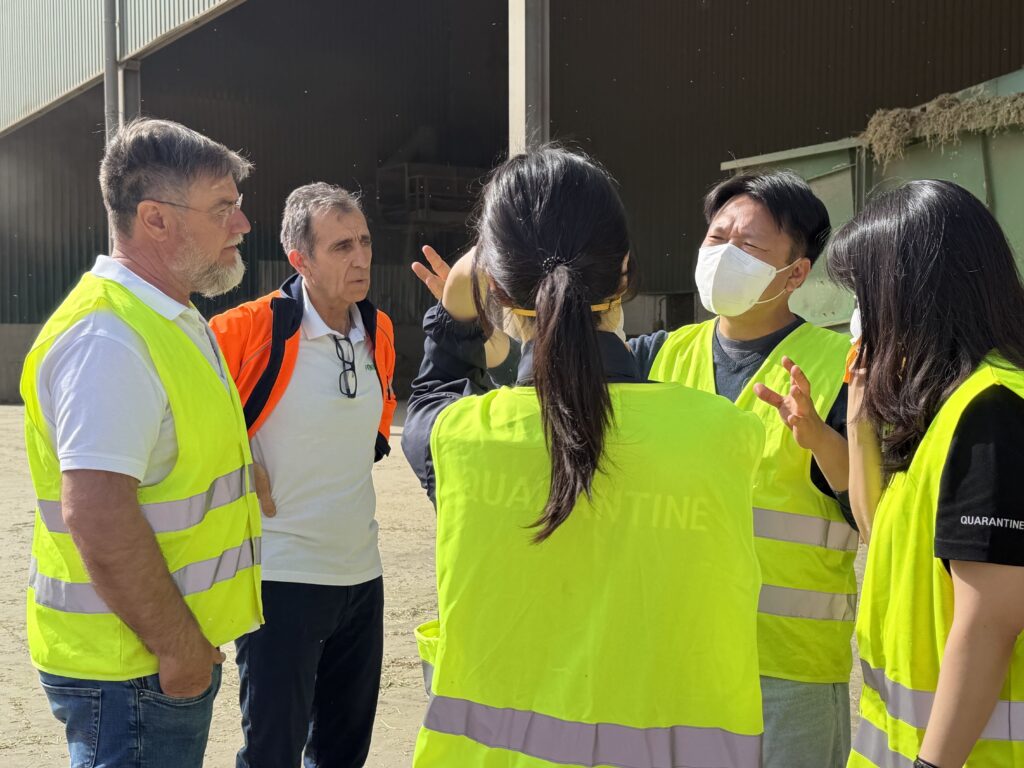
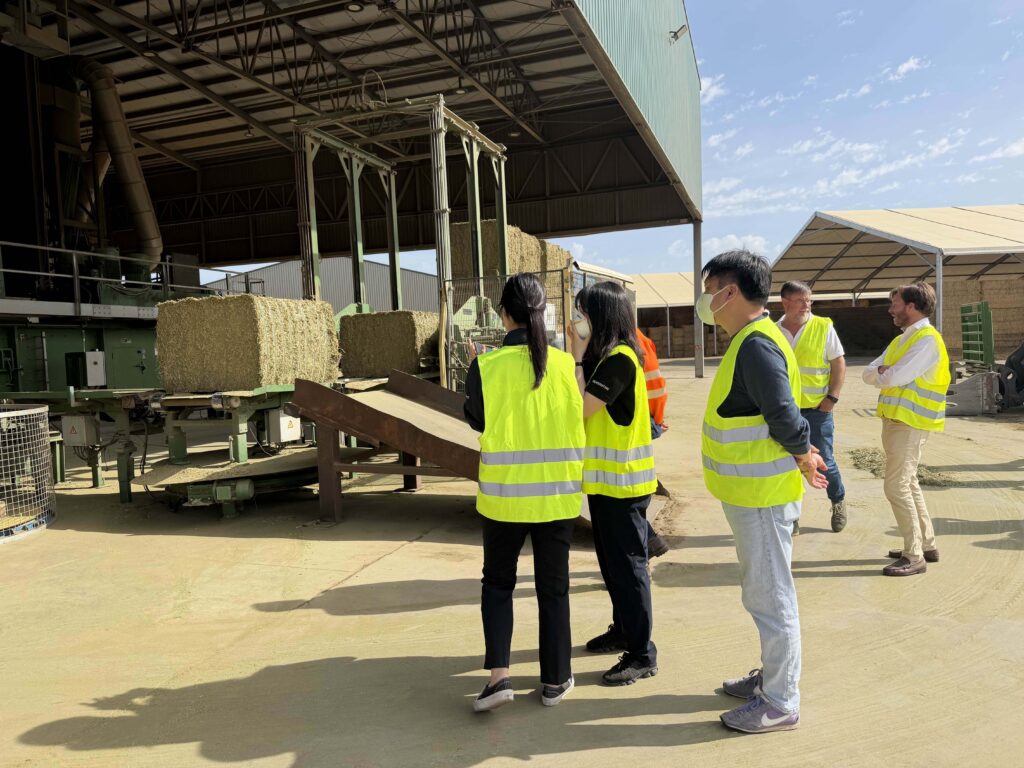
As part of that process, a delegation composed of inspectors from South Korea’s Animal and Plant Quarantine Agency (APQA), accompanied by representatives from MAPA and the relevant agencies of the Government of Aragon, visited various facilities in our region, including FORSA’s facilities in Almuniente.
The purpose of these visits is to verify that companies comply with the technical, health, and traceability requirements established by the Korean authorities in order to reauthorize the export of dehydrated alfalfa. To this end, both production procedures and the control and documentation systems that ensure product safety are reviewed.
Beyond the inspection itself—which FORSA successfully passed—this process highlights the importance of international markets for the Spanish forage sector. Spain produces a very significant portion of the dehydrated alfalfa sold in Europe and exports a large share of that production; therefore, keeping these markets open is essential to ensuring stability in the sector and guaranteeing the competitiveness of our companies.
The recovery of the Korean market is therefore positive news for the entire sector, as it will not only allow us to regain an important trade destination but also strengthen international confidence in Spain’s production system and in our companies’ ability to meet the quality, traceability, and safety standards demanded by the most advanced markets.
At FORSA, we view these types of audits as an opportunity to continue demonstrating our commitment to quality, continuous improvement, and international expansion. Because exporting isn’t just about producing high-quality forage; it also means building the trust necessary so that our customers know that behind our product lies a robust, transparent process backed by inspections from the relevant authorities.